
Home care, telecare, meal delivery, nursing care: services for seniors cover a wide range of needs. Their real effectiveness depends less on whether they exist than on how well they work together and are coordinated. This article compares the main services that make everyday life easier for seniors, assesses gaps in coverage and identifies the sticking points families encounter most often.
Comparing services for seniors: coverage and limitations of each option
Not all services meet the same needs, and the way they operate varies considerably. The table below summarizes the most common services for helping seniors remain at home.
| Service | Need covered | How it works | Possible funding |
|---|---|---|---|
| Home care (SAAD) | Everyday tasks (housework, shopping, personal care) | Service provider or agency acting on the client’s behalf | APA, ARSM, tax credit |
| Meal delivery | Balanced nutrition | Daily or weekly delivery | Departmental social assistance, pension funds |
| Telecare | Safety, alerts in the event of a fall | Connected bracelet or pendant, available 24/7 | APA, departmental assistance |
| Home nursing care (SSIAD/SAD) | Medical and paramedical care | Medical prescription, regular visits | Health insurance |
| Assisted transport | Mobility (medical appointments, shopping) | Adapted vehicle, accompanying person | Varies by department |
| Home adaptations | Fall prevention | Home improvement work | MaPrimeAdapt’ |
The table shows that each service operates according to its own funding and access arrangements. Seniors who need three services at once often have to coordinate different providers themselves, or rely on a family member to do so. To identify the services offered by Seniors des Infos that suit a particular situation, it helps to match actual needs with the support available locally.
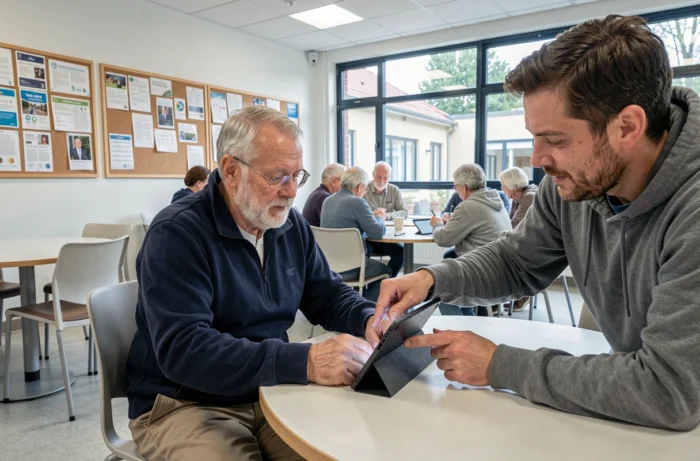
Coordinating home-based autonomy services: what has changed since 2024
Since January 1, 2024, home-based autonomy services have had an explicit coordination role. The regulatory framework now tasks them with identifying vulnerabilities, detecting situations of abuse and taking the needs of family caregivers into account.
This change goes beyond simply helping with everyday tasks. It transforms the role of home care services: rather than just providing help with specific tasks, they now form part of a broader support network.
A gap between the legal framework and what happens on the ground
The coordination role is set out in law. In practice, families often find that links between home care, nursing care and telecare are still managed manually. Seniors or their caregivers still frequently have to act as coordinators between different providers.
The departmental public autonomy service aims to address this shortcoming, but it is not an immediate solution to every breakdown in coordination.
Fall prevention and home adaptations: an underestimated issue
Falls are the leading cause of accidental death among seniors. Prevention starts with practical home adaptations: grab bars, removing thresholds, better lighting in walkways and replacing a bathtub with a walk-in shower.
The MaPrimeAdapt’ program helps fund some of this work. However, available data indicate that the number of adaptations completed remains below the national target. Several barriers help explain this gap:
- Seniors and their families are often unaware of the program and may only learn about the assistance after a first fall
- The application process is complex, requiring an initial home assessment and compliant quotes
- The wait between applying and work starting can stretch over several months
Telecare provides additional support, but it comes into play after a fall, not before. A connected bracelet sends an alert; it does not remove a slippery rug from the hallway. Combining home adaptations with telecare addresses both stages: prevention and response.
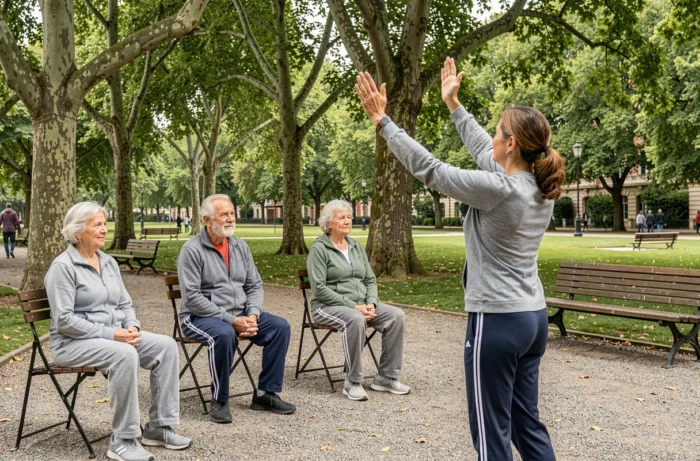
Support for caregivers: respite care at home as an indirect service for seniors
A senior’s well-being also depends on whether their caregiver can keep going over the long term. When a family caregiver becomes exhausted, the quality of care often declines rapidly, followed by hospitalization or an emergency move into residential care.
Respite care services offer several options beyond simply providing temporary accommodation:
- In-home cover for occasional needs (the caregiver’s medical appointment, or a chance to rest)
- Relief care, providing continuous support for up to 72 hours in the senior’s home
- Information, advice and group training for caregivers
- Help with administrative procedures related to independent living
Relief care for up to 72 hours allows seniors to remain in familiar surroundings while their caregiver is away. This is important: seniors do not have to move, reducing the disorientation and stress associated with a temporary change of location.
Social activities and everyday connection
Beyond care and safety, isolation remains a factor that can worsen the loss of independence. Social support services (friendly visits, accompanied outings and group activities) help people stay connected. Availability varies widely from one department to another, and these services are not always covered by dedicated funding.
There is no shortage of solutions to make everyday life easier for seniors. The main challenge lies in coordinating them. Seniors who receive home care, telecare and meal delivery without a single provider coordinating everything remain at risk of gaps in support. The coordination role assigned to autonomy services in 2024 provides the right framework, but whether these services truly deliver on their promise will depend on how that role is put into practice.