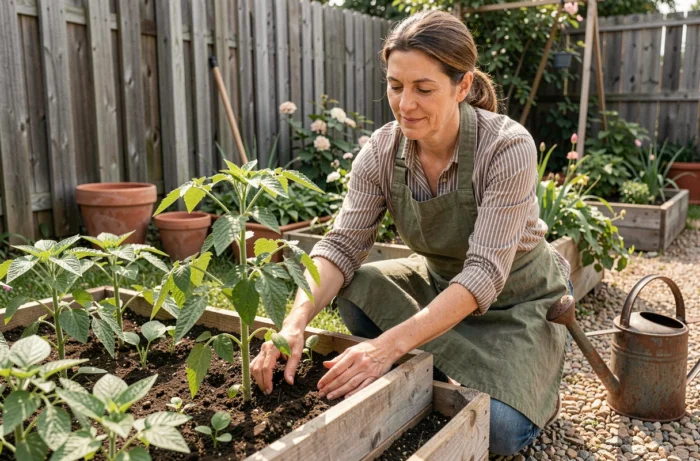
A tomato plant that turns yellow as early as July, a radish seedling that doesn’t sprout, a lawn scorched in August: these disappointments rarely stem from a lack of motivation. They are due to a few poorly laid foundations at the start. Succeeding in your garden relies on concrete choices, tailored to your soil, your local climate, and the time you can realistically dedicate to maintenance.
Soil and exposure: the two parameters that determine everything else
Before buying any seed packets, the first step is to observe your land. The nature of the soil dictates the choice of plants, their growth, and their resistance to diseases.
Clay soil retains water and nutrients well, but it compacts quickly. In contrast, sandy soil drains rapidly and dries out in a few days without rain. A simple test can help you decide: take a handful of moist soil and squeeze it. If it forms a compact ball that doesn’t crumble, your soil is likely clayey.
Exposure plays a similar role. A vegetable garden facing south receives enough light for fruiting vegetables (tomatoes, zucchinis, peppers). A partially shaded area is better suited for salads, spinach, and herbs like parsley or chives. By consulting all the pages of Jardiner Facile, you will find detailed sheets that cross-reference soil type and exposure for each variety.
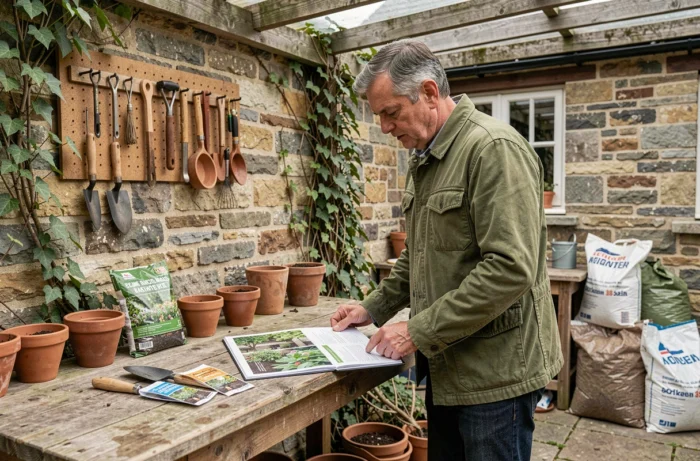
Garden watering: adjusting the amount to the actual climate
Watering remains the area where mistakes are most costly, both in terms of water and results. Have you ever noticed that some plants seem more vigorous after a week without rain than others after daily watering? Too frequent watering encourages fungal diseases and prevents roots from growing deep.
The right time and the right method
Water early in the morning or late in the day when evaporation is low. Aim for the base of the plants, not the foliage. A mulch of a few centimeters (straw, wood chips, dried grass clippings) significantly reduces water needs.
An Ifop barometer for Unep published in March 2025 shows that many French people have already changed their gardening habits in response to climate change. Among the adopted practices: rainwater harvesting, a less uniform lawn, and the choice of drought-resistant plants.
Local restrictions and water recovery
A generic watering calendar does not take into account the prefectural orders that vary according to the drought alert level in your department. The VigiEau website allows you to check the rules in effect at your address.
Rainwater harvesting is a good supplement, but it has a concrete limit: reservoirs empty quickly during a dry summer if the storage capacity and the collected roof area are insufficient. Plan for a volume suited to your actual needs rather than a small symbolic collector.
Maintaining the vegetable garden and flower beds without chemicals
Since the ban on most chemical herbicides for individuals, natural techniques have become the norm. Three simple practices cover the majority of needs:
- Organic mulching limits the growth of weeds and nourishes the soil as it decomposes. Renewing the layer once or twice a year is sufficient for most flower beds.
- Plant associations play a role in mutual protection. Basil planted near tomatoes repels certain insects, while nasturtiums attract aphids away from vegetables.
- Composting green waste and kitchen scraps provides a free and rich amendment. Mature compost improves soil structure regardless of its type, clayey or sandy.
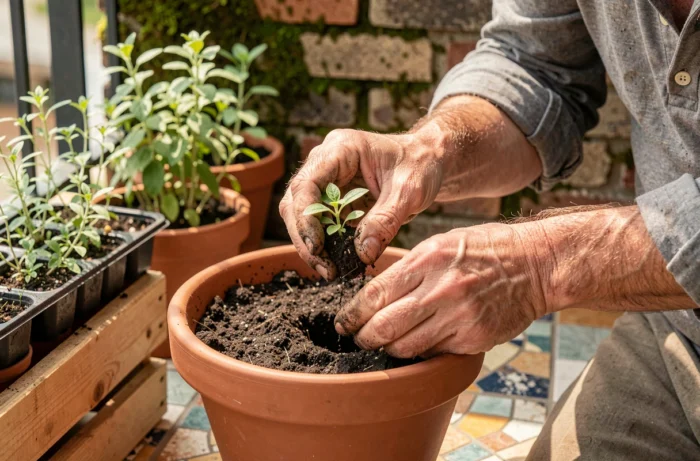
Installing new plants at the right time
Choosing suitable varieties does not guarantee success if planting occurs in the middle of summer. Young plants need still-cool soil to develop their roots. Autumn and early spring remain the two most reliable windows for shrubs, perennials, and fruit trees.
Regular watering during the first weeks after planting makes all the difference. A stressed plant at installation may take an entire season to catch up.
Gardening tools for beginners: the essentials
Why invest in a dozen tools when five are enough to cover almost all tasks in a family garden? Here is the starter kit that avoids unnecessary purchases:
- A spade to turn and loosen the soil before planting.
- A rake to level the soil, break clumps, and prepare for sowing.
- A quality pruner for trimming shrubs, roses, and perennials without crushing the stems.
- A trowel (small hand shovel) for transplanting and potting.
- A watering can or a hose with an adjustable nozzle to dose water at the base of the plants.
Opt for forged steel tools with wooden handles, which are more durable than stamped metal models. A good, sharp pruner prevents ragged cuts that weaken branches against diseases.
Planning the garden season by season
A successful garden throughout the year requires a minimum of planning. No need for a complex spreadsheet: a simple notebook is enough to note sowing dates, planted varieties, and results obtained.
In spring, prepare the soil and start the first sowings under cover. In summer, maintenance (watering, weeding, harvesting) occupies most of the time. Autumn is the ideal season to plant trees and shrubs, amend the soil with compost, and prepare the plots for the following year. In winter, clean and sharpen your tools, plan crop rotations to avoid depleting the soil.
Keeping this logbook, even briefly, helps avoid repeating the same mistakes from year to year. Gardening progresses mainly through the patient observation of one’s own land.