
A mobile home for less than 30,000 euros, placed on a camping plot with a sea view: the project seems like a good deal. Before signing, it is important to understand that this type of purchase does not work like a traditional real estate investment. The land usually does not belong to you, the property loses value each year, and fixed costs weigh heavily even when no one occupies the premises.
Private plot or camping site: what the PLU really changes
Most articles on the subject compare purchase prices and rental income. Few address the question beforehand: do you have the right to install a mobile home on the plot you are targeting?
A mobile home is a recreational vehicle. Its installation depends on the location. In a campsite or a residential leisure park (PRL), installation is regulated and generally permitted. On an ordinary private plot, it’s a different story.
The local urban planning plan (PLU) of the municipality determines what is possible. Some areas outright prohibit mobile residences. Others impose connection conditions to networks (water, electricity, sanitation) that can represent a significant budget.
Before any land purchase, checking with the town hall’s urban planning department remains the only reliable step. A buildable plot does not mean it accepts a mobile home, and a non-buildable plot can sometimes accommodate recreational accommodations under certain conditions. To better understand the investment on trendimmo.fr, it is useful to cross-reference these administrative constraints with financial projections.
If your project includes multiple accommodations on the same plot, the development formalities change again. The Urban Planning Code specifically regulates plots intended to host mobile or removable residences, with distinct obligations depending on the number of locations.
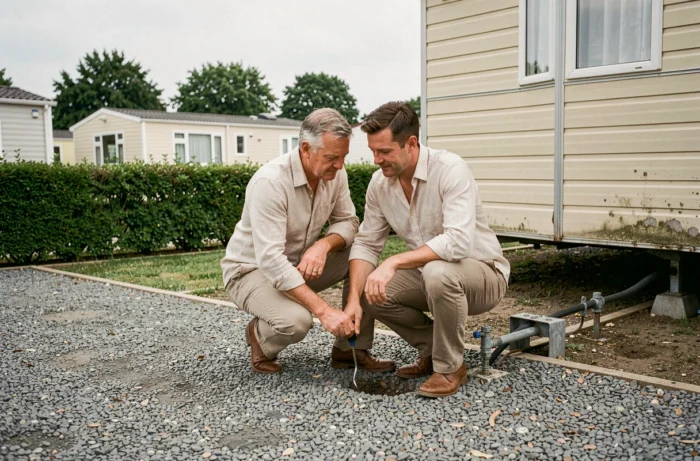
Depreciation of the mobile home: the invisible cost of resale
A new mobile home loses value as soon as it is delivered. This mechanism is similar to that of a vehicle: the depreciation is rapid in the first years, then slows down without ever reversing.
A mobile home is a movable property, not real estate. You do not accumulate land assets. The land belongs to the campsite or the PRL, and your location contract is renewed each year (or for a few years).
Why is this point decisive? Because if the location contract is not renewed, you must move your mobile home. The cost of transport and reinstallation can reach several thousand euros, not to mention the difficulty of finding a new available location. The move is a real exit risk, not just a logistical expense.
Upon resale, a used mobile home is negotiated well below its initial purchase price. Models over ten years old find it hard to sell, especially if the campsite imposes age restrictions on the installed equipment.
Fixed charges and seasonal rental: the calculation that decides everything
The profitability of a mobile home relies on a fragile balance between fixed charges and seasonal rental income. Here are the items to include in the calculation:
- The annual location fee, which varies according to campsites and can be revised upwards each year
- Ongoing maintenance (waterproofing, plumbing, terrace) and property insurance, unavoidable costs even without rental
- Management fees if you entrust the rental to the campsite, often in the form of a commission on rented nights
- Any obligations for clearing in areas exposed to fire risk, which generate regular work at the owner’s expense
Profitability depends as much on the campsite as on the mobile home itself. A well-located establishment, with a pool and activities, fills its rentals in high season. A campsite experiencing a decline in visitors makes the project unprofitable, regardless of the condition of your mobile home.
LMNP status and VAT recovery
The status of non-professional furnished rental (LMNP) allows, under certain conditions, the recovery of VAT on the purchase of a new mobile home. This tax lever improves the balance at entry, but it assumes that the property is actually rented out and that the reporting obligations are respected for several years.
VAT recovery does not erase the depreciation of the property. It reduces the initial acquisition cost, which can make the operation viable if the holding period is sufficiently long and the occupancy rate is correct.
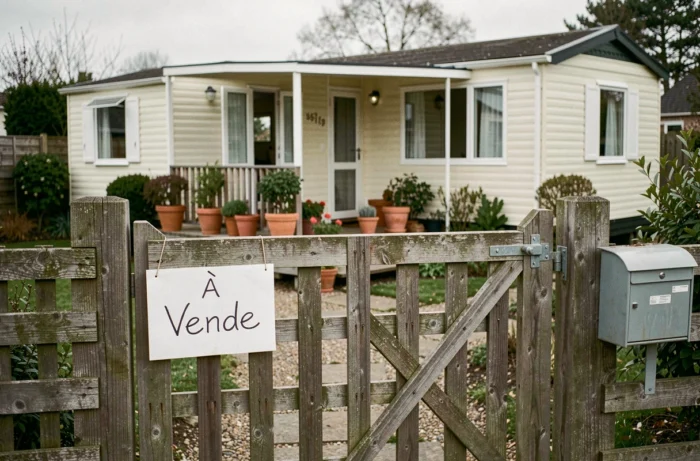
Mobile home or traditional real estate: two incompatible logics
Comparing a mobile home to an apartment or house does not make much sense. The two serve different objectives.
- Traditional real estate builds land assets that can increase in value over the long term, with notary fees and heavier taxation at entry
- The mobile home offers an accessible entry ticket (often between a few thousand euros for used and several tens of thousands for new), without notary fees or property taxes, but with a value that decreases each year
- The seasonal rental of a well-placed mobile home can offset part of the annual costs, while rental real estate aims for a more regular return over twelve months
The mobile home works better when seen as an optimized expense for vacations, possibly amortized by subletting, rather than as a financial investment. Expecting a return comparable to that of real estate almost always leads to disappointment.
Buying a plot with a mobile home can remain relevant for those who want a seasonal pied-à-terre without heavily indebting themselves. The main risk is not the amount invested, but the gap between profitability expectations and the reality of a depreciating asset on land that you do not own.