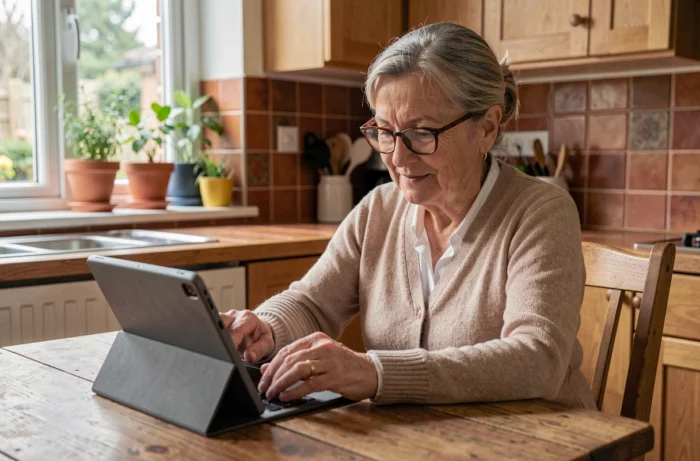
Supporting older adults to live at home depends on a combination of services and measures whose effectiveness varies by region, type of housing and level of dependency. Aging well at home today means bringing together home adaptations, service coordination and proactive prevention—three areas whose practical results deserve comparison.
Home adaptations for older adults: the gap between targets and results
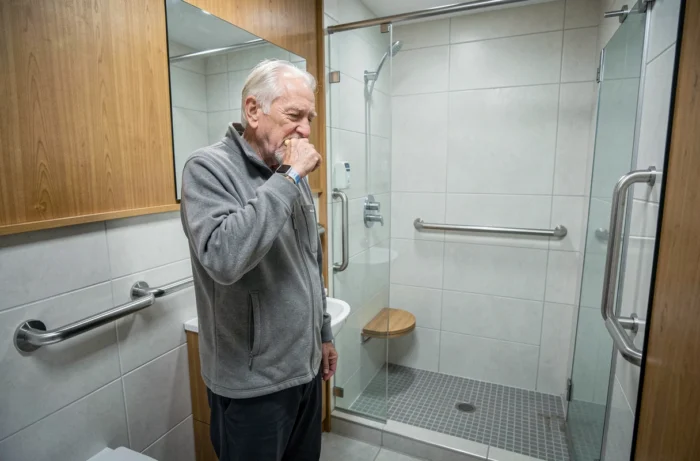
MaPrimeAdapt’, launched to fund accessibility improvements, has delivered mixed results. According to Anah data reported by MonImmeuble in October 2026, around 37,000 homes were adapted in 2025, against a target of 68,000. The scheme covers some of the cost of work (level-access showers, grab bars, wider doorways), but the amount left to pay can remain significant even after the grant.
This shortfall raises questions about the scheme’s ability to meet actual needs. Older homeowners with older properties often need several types of work, pushing the total cost well beyond the funding cap.
Platforms such as Philomène Senior for aging well at home provide information on the home adaptation process and direct people to the right contacts for their individual circumstances.
| Indicator | Annual national target | Achieved in 2025 |
|---|---|---|
| Homes adapted through MaPrimeAdapt’ | 68,000 | 37,000 |
| Target achieved | 100% | About 54% |
This table shows that nearly half of the target remains unmet. Sources identify several reasons, including complex administrative procedures, a shortage of trained contractors and out-of-pocket costs that deter people on low incomes.
Fall prevention for older adults: an underestimated challenge
Competitors often treat fall prevention as a subsection of home adaptations. Data from Santé publique France, reported by Doctissimo, put the issue in a different light: falls cause deaths and hospitalizations among people aged 65 and over every year, with numbers up compared with 2019.
Prevention involves more than installing a grab bar in the bathroom. It requires action on three distinct fronts:
- Making physical changes to the home (non-slip flooring, better lighting in walkways, removing thresholds)
- Maintaining appropriate physical activity, which reduces the risk of losing balance by strengthening muscle mass and proprioception
- Reviewing medications, as some treatments (blood pressure medications, psychotropic drugs) increase the risk of dizziness and falls
Addressing just one of these factors is not enough. A perfectly adapted home cannot make up for poorly managed polypharmacy, and vice versa. The most effective prevention programs combine all three approaches.
Departmental public autonomy service: coordination varies by region
Since January 1, 2025, the Departmental Public Autonomy Service (SPDA) has been intended to serve as a one-stop shop for older adults and their families. Established by the law of April 8, 2024, it coordinates access to information, care pathways and prevention.
Early feedback points to significant differences in implementation from one department to another. Some areas already had strong coordination structures (CLIC, MAIA) and integrated the SPDA without disruption. Others are starting from further behind, with rollout delays leaving families without a clear point of contact during the transition.
What the SPDA changes in practice for older adults
The SPDA does not provide any new financial assistance. Its value lies in simplifying the administrative process: one point of entry instead of multiple scattered offices. For an older person applying for APA, completing a MaPrimeAdapt’ application and looking for home care, having fewer contacts to deal with saves a measurable amount of time.
The current limitation is the uneven rollout. Until every department reaches the same level of service, where people live will continue to affect the quality of support they receive.
Telecare and connected sensors: what technology can and cannot do
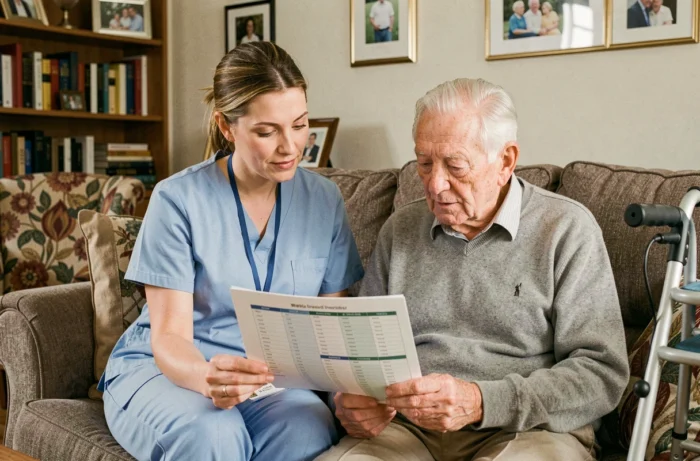
Connected devices (fall detectors, motion sensors, alert watches) have become increasingly common in recent years. They offer real benefits for everyday safety: if an older person living alone falls at night, an automatic alert is triggered without them having to press a button.
Technology cannot replace human connection. A sensor can detect a fall, but it cannot prevent loneliness. The most comprehensive telecare services include regular friendly check-in calls, but this feature is often optional and costs extra.
Another blind spot is whether older adults themselves are willing to use these devices. Wearing an alert bracelet or accepting sensors in the living room means acknowledging vulnerability, which can deter people who are still relatively independent—precisely those who would benefit most from early detection.
Supporting older adults to live at home depends less on any single solution than on bringing together home adaptations, proactive prevention and coordination across local services. The gap between national targets and local results remains the main sticking point. Until MaPrimeAdapt’ meets its targets and the SPDA is fully operational everywhere, the quality of aging at home will depend largely on the department where a person lives.