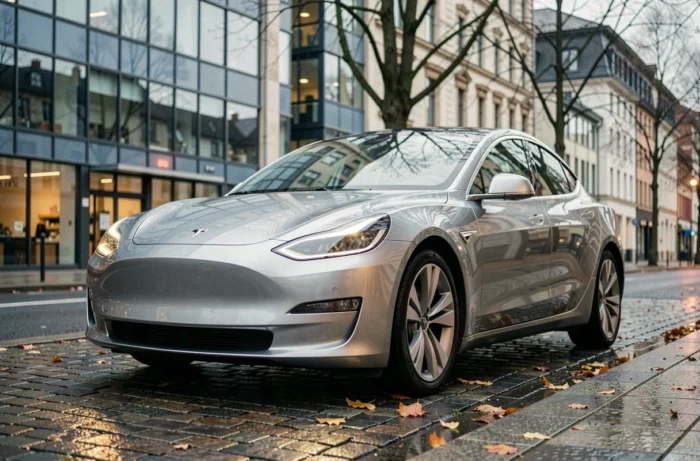
The automotive news at the end of 2026 revolves around three technical axes: a tightening of European regulations that goes beyond emissions, demonstrations of autonomous driving in real conditions, and a Paris Motor Show rich in world premieres. Each of these axes concretely modifies what manufacturers offer and what drivers can expect.
European Homologation: New Requirements Beyond Emissions
A delegated regulation from the European Union, published on September 24, 2026, expands the scope of vehicle approval. Tests now focus on the durability of onboard batteries, brake particle emissions, the power of electrified vehicles, and electric range at low temperatures.
This last point changes the game for buyers. Until now, the displayed range was based on standardized cycles conducted at moderate temperatures. The new text imposes cold weather range measurement methods, requiring manufacturers to communicate values closer to actual winter usage.
Specifically, an electric vehicle whose technical sheet announces a certain range must also document its performance under degraded conditions. For drivers who travel in the mountains or in northern France, this information was previously absent from catalogs. It now becomes a regulatory criterion.
Regular followers of Actualité Voitures will find this data throughout the technical sheets of models approved under this new framework.
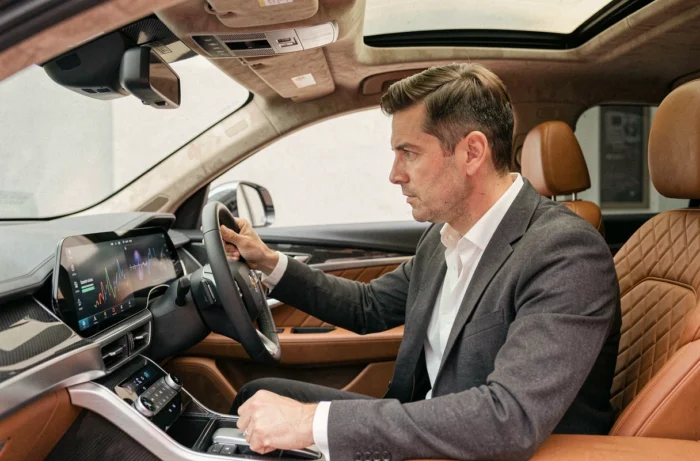
Paris Motor Show 2026: Automotive Innovations Reshaping the Market
The 2026 Paris Motor Show featured numerous world premieres. Among the manufacturers present, Chinese brands such as Omoda, Jaecoo, and Leapmotor confirmed their strategy for establishing a presence in Europe with new models.
Affordable Electric SUVs and City Cars
The dominant trend of the show remains the affordable electric SUV. Several manufacturers, both European and Asian, presented models positioned below the psychological barrier that had deterred some buyers. Leapmotor unveiled two significant new models, including one whose homologated range in Europe highlights the gap between the figures announced in other markets and the values measured according to European protocols.
Citroën confirms its repositioning towards compact electric vehicles aimed at urban use. Renault, for its part, is focusing on an expanded range that covers everything from small utility vehicles to sports cars.
Chinese Manufacturers in France: An Industrial Topic
The presence of Chinese brands at the Motor Show is no longer just a curiosity. Omoda and Jaecoo announced two major new products aimed at the French market. The current tension is clear: competitiveness hinges on production costs and tariffs, not just on technology.
- Omoda and Jaecoo target the compact SUV segment with aggressive pricing and dense technological equipment.
- Leapmotor relies on a partnership with Stellantis for its distribution in Europe, giving it direct access to the after-sales network.
- European manufacturers are responding with accelerated launches of electric models produced on the continent, sometimes with batteries whose durability is now regulated by the new regulation.
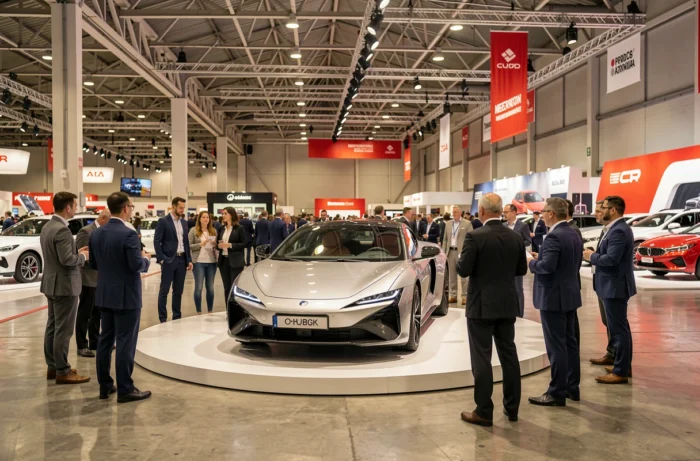
Autonomous Driving: Real-World Testing at the Motor Show
Beyond the static displays, the Paris Motor Show 2026 offered a new format. Visitors were able to test American and Chinese autonomous vehicles in real traffic conditions, not just on closed circuits. This type of demonstration marks a shift from previous editions, where autonomous driving was limited to videos or simulators.
The technical challenge lies in the transition from level 2 (driver assistance) to level 3 or 4 (the vehicle makes decisions within a defined perimeter). In real urban conditions, the systems must manage pedestrians, two-wheelers, construction, and unpredictable behaviors. Feedback from visitors who tested these prototypes helps measure the gap between marketing promises and the actual experience.
What These Tests Reveal About System Maturity
The question is no longer whether autonomous driving works in the lab. It works. The focus now is on reliability in degraded scenarios: rain, faded road markings, temporary signage. Public tests serve both to test the technology and to prepare for social acceptance of these vehicles.
For drivers, the practical translation remains distant. No level 4 autonomous vehicle is currently approved for sale to the general public in Europe. However, the demonstrations at the Motor Show allow for tracking the real progress of these systems, beyond the regularly postponed launch date announcements.
Sports Cars and Niche Models: The Other Face of the Show
The Motor Show is not exclusively electric. Porsche is preparing a supercar positioned above the 911 with what is described as a radical engine choice. Alfa Romeo has announced the series integration of equipment derived from its Cuorerosso concept car, a choice that goes against the current trend towards total digitization of the interior.
- BMW is expanding its motorcycle range with the F 450 RR, a fairing sport bike accessible to A2 license holders.
- Alfa Romeo is betting on a return to physical controls for certain functions, in response to recurring criticisms about touch screens.
- Porsche confirms that high-end combustion engines still have an audience, even in a context of transition to electric.
These launches remind us that the automotive market is not simply a binary shift to all-electric. The sports and premium segments remain laboratories for technical choices that then flow into more accessible ranges.
The automotive news at the end of 2026 thus reads on multiple levels: a more demanding regulatory framework, international competition now playing out on European soil, and technological advances tested in public. The next structuring appointment will be the effective application of the regulation on battery durability, the effects of which will be felt in the upcoming homologations.