A Ninja air fryer heats more intensely than most air fryers: some models reach 240°C, while other brands top out at 200°C. This extra power changes cooking times and settings, which can be confusing the first time you use one. Ninja air fryer recipe PDFs provide temperature and timing guidelines, but how useful they are depends on your model and the number of servings you’re making.
How to adapt a Ninja recipe PDF when you switch models
Recipe guides supplied by Ninja or available to download online are calibrated for a specific appliance, often the AF100 or Dual Zone. Owners of a Ninja Crispy Pro or Ninja Foodi Flex don’t have the same basket capacity or heat distribution.
The direct result: a recipe calibrated for a large basket can overcook in a compact model. With less usable space, food sits closer to the heating element. Heat becomes more concentrated, and cooking speeds up.
In most cases, two adjustments are enough to compensate:
- Reduce the temperature by 10 to 20°C from what the PDF recommends, then check the food halfway through by opening the drawer.
- Cook smaller batches to prevent food from piling up, which blocks airflow and creates soggy spots.
- Shake the basket or turn the food halfway through cooking, even if the recipe doesn’t mention it, whenever the food is stacked more than one layer deep.
A PDF is a starting point. The final settings always come down to your judgment, based on the actual drawer size and the power of your model.
For a reference document covering the basics, this free Ninja Foodi recipe PDF in French covers the main settings and beginner-friendly dishes.
Cooking for one in a Ninja air fryer: settings and pitfalls
Cooking a single serving in an air fryer designed for four people presents a problem that PDFs rarely address. An almost-empty basket changes airflow and can dry out food faster than expected.
The basic rule: cover at least one-third of the basket’s surface. Below that, hot air hits the food directly without obstruction, speeding up surface dehydration. A single fish fillet in a large Dual Zone drawer, for example, may dry out before it’s cooked through.
Shorter cooking times for small portions
Ninja cooking charts list times designed for a standard load. For a single serving, subtracting two to three minutes from the recommended time usually gives a better result. Visual checks are still the only reliable indicator: opening the drawer doesn’t stop the cycle on Ninja models, and cooking resumes when you close it.
The amount of oil matters too. PDFs often suggest a tablespoon to coat the food. For an individual serving, half a teaspoon is enough to get a crispy result without adding too much fat. Too much oil on a small amount of food makes it fried rather than roasted.
Three easy Ninja air fryer recipes to try on day one
Rather than listing dozens of dishes, these three recipes cover the basic techniques and help you understand how the appliance responds.
Crispy chicken without preheating
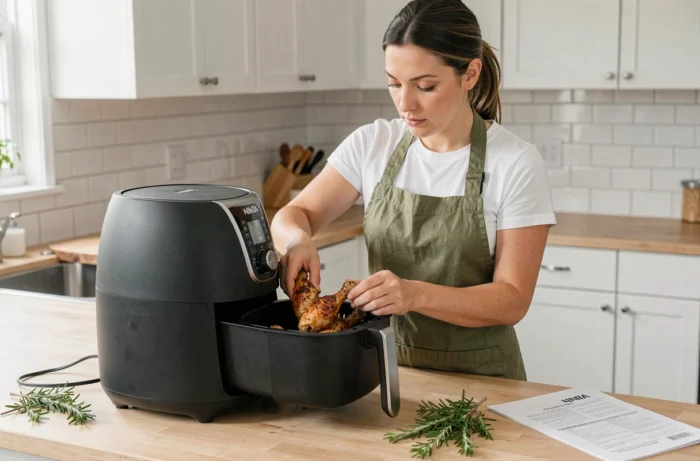
Chicken thighs are one of the most common tests for a Ninja air fryer. The skin releases fat as it cooks, reducing the risk of the meat drying out. A temperature of 200°C works for most Ninja models with this cut. A light drizzle of oil on the skin and some salt are all you need. Cooking time varies depending on thickness, but turning the thighs halfway through ensures even browning.
Preheating isn’t essential for chicken in newer Ninja models. The manuals for several models say that starting from cold adds a few minutes to the cooking time without affecting the final result.
Roasted vegetables in under fifteen minutes
Evenly cut zucchini, bell peppers, and mushrooms cook quickly at 200°C. The key is not to stack them. A single layer in the basket lets the heat reach each piece directly. Add half a teaspoon of oil and shake the basket once during cooking for a result similar to a conventional oven, in much less time.

Homemade fries in a Ninja air fryer
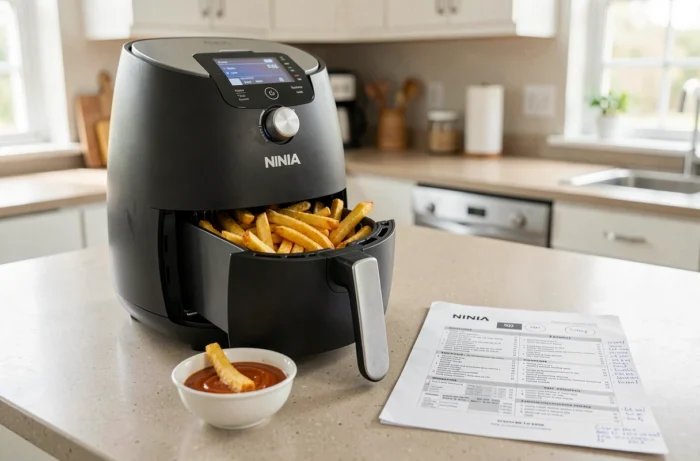
Cut the potatoes into sticks, rinse them in cold water to remove surface starch, then dry them before placing them in the basket. Removing the starch is what makes the difference between crispy fries and soggy ones. Add a tablespoon of oil for a standard serving, shake the basket halfway through cooking, and let the usual temperature of 200°C do the rest.
Free Ninja recipe PDFs: what they include and what they leave out
Official Ninja PDF booklets and community guides shared online (in Facebook groups and forums) bring together cooking charts by food type, with temperatures and times. These documents cover the basics: chicken, fish, vegetables, frozen foods, and a few simple desserts.
What they regularly leave out:
- Adjustments for small-basket models or single-zone versions, even though the cooking times are calibrated for Dual Zone models.
- Oil quantities for one or two servings, since the recommendations assume a full drawer.
- How foods interact when both zones are used at the same time (flavor transfer and different cooking times between drawers).
A Ninja recipe PDF is a handy quick-reference guide to keep in the kitchen. For beginners, the food-by-food cooking chart is more useful than elaborate recipes, because mastering temperature and cooking-time combinations makes you confident with any ingredient.
One habit worth keeping after your first few uses: write your personal adjustments on the PDF (actual cooking time, amount of oil, position in the basket). These notes turn a generic guide into a reference tailored to your own appliance.