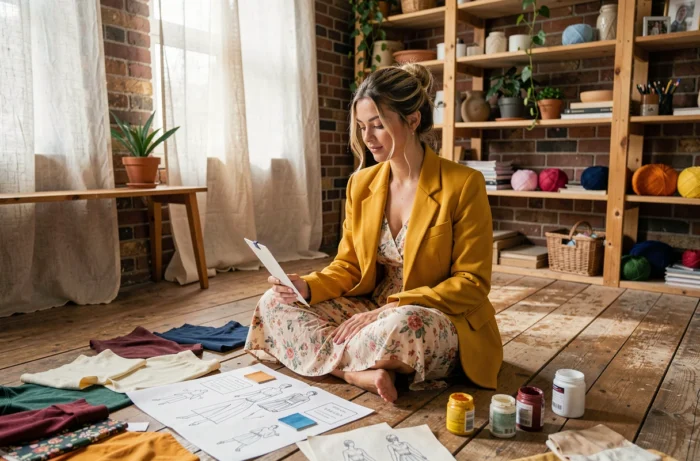
Fashion and decorative flair are not fixed personality traits. They rely on documented cognitive mechanisms, including perceptual curiosity and cognitive flexibility, which can be developed through regular practice.
In France, initiatives such as Refashion’s Repair Bonus, in effect since 2023, even offer financial incentives for textile customization. The topic goes beyond simple style advice: it touches on how the brain processes novelty and how everyday habits shape or inhibit creative expression.
Perceptual curiosity and creativity: what recent research shows
A study conducted through a dedicated app measured changes in curiosity among participants who engaged in small daily practices. The results showed an increase in perceptual curiosity and creative behaviors compared with the control group.
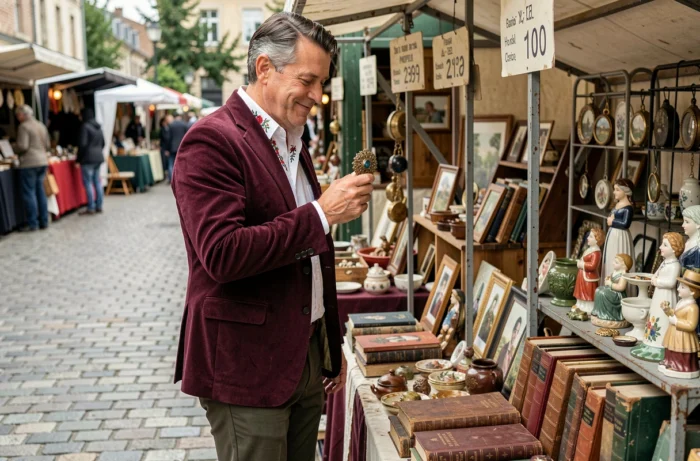
One notable finding: it was not the activities themselves that mattered most, but the attention paid to everyday experiences. Spotting an architectural detail along a familiar route, noticing a color combination in a shop window, or observing an unusual texture on a fabric—these micro-observations nurture the ability to make new connections.
For resources that bring together flair, style, and creative ideas for everyday life, one useful reference is https://lafantaisie.net/, which explores these themes from several angles.
Another study, published in May 2025 in Tourism Management, challenges a common assumption. A change of scenery (traveling or visiting a new place) is associated with greater cognitive flexibility and ideas spanning more categories. The researchers distinguish this diversity from originality: travel alone did not produce more original ideas. A new environment broadens the range of possibilities, but does not replace the work of transforming them that comes afterward.
Customizing clothes: textile upcycling and the Repair Bonus
Cultivating your own fashion flair does not mean simply buying more. Textile upcycling—embroidering a design, adding patches, dyeing a garment, or altering its cut—is a practical creative activity that changes how you relate to your clothes.
Since 2023, Refashion’s Repair Bonus has helped reduce the cost of repairs carried out by certified professionals in France. The scheme is not solely about environmental sustainability: it makes customization accessible to people who might previously have needed a tailor or extensive experience.
Practical upcycling ideas for everyday life
Transforming an existing garment takes little time and requires minimal equipment. Here are a few ideas tried out by textile workshops:
- Embroider a geometric or floral design on a collar, pocket, or hem. An embroidery hoop, thread, and needle are all you need to complete your first project in under an hour.
- Apply iron-on or sew-on patches to a denim jacket, canvas bag, or pair of trousers. Placement—on the shoulder, elbow, or knee—can radically change how the garment looks.
- Partially dye a light-colored garment using techniques such as tie-dye or shibori, which produce unique patterns with every attempt.
- Cut and sew: turn trousers into shorts, a T-shirt into a crop top, or combine two mismatched garments into one.
Each of these alterations produces a result that cannot be exactly replicated—which is precisely what defines personal style rather than following a trend.
Creative journals and observation habits: building a reflex
Keeping a journal—on paper or digitally—to record ideas, sketches, word associations, or collages is a recurring recommendation for creativity. Research on perceptual curiosity offers a useful insight: deliberately paying attention to everyday details matters more than the number of activities completed.
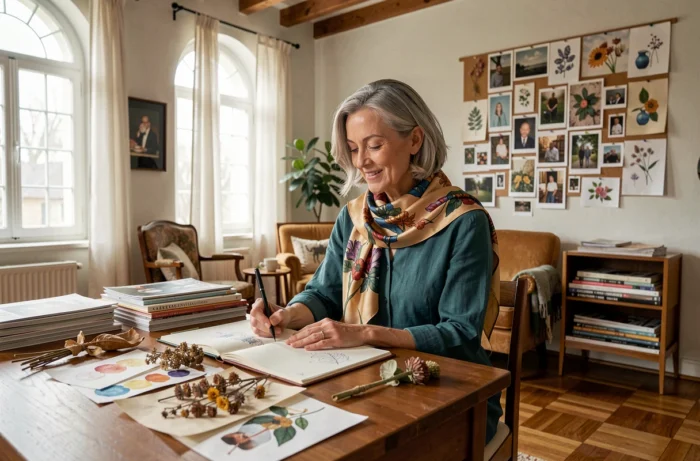
A creative journal does not need to look like an art diary. It might contain a photo of a shop window taken on your phone, a color combination spotted at a market, a scrap of fabric, or simply three words jotted down on the go.
What makes a useful journal different from one that gets abandoned
Consistency matters more than the quality of each entry. Participants in the curiosity study who maintained a daily practice, however minimal, showed more pronounced results than those who completed occasional, more ambitious exercises.
Setting a specific time—first thing in the morning, during your commute, or at lunch—reduces friction. The journal then becomes a reflex rather than a project, and imagination draws on a store of accumulated observations instead of waiting for inspiration to strike just when you need it.
Routine and flair: a more nuanced relationship than it might seem
Competitors often frame routine and creativity as opposing forces. The available evidence suggests a more nuanced relationship. Routine frees up cognitive resources otherwise spent on repetitive decisions (what to eat, which route to take, or what to wear to the office). That mental energy can then be redirected toward specific creative choices.
Everyday flair does not mean turning everything upside down. It means identifying moments in the day when you can break from habit without too much effort: taking a different route home, preparing a dish with a spice you have never used, or wearing an accessory that contrasts with the rest of your outfit.
The study on travel and creativity supports this idea: novelty broadens your range of ideas without guaranteeing originality. The work of selecting, combining, and shaping ideas is still necessary. A creative mind is not one that is constantly stimulated, but one that alternates between gathering (observation, curiosity) and transforming (choosing, creating).
The Repair Bonus, upcycling, and an observation journal all have something in common. They turn an ordinary act (repairing, writing something down, looking) into raw material for a style that depends neither on your budget nor on the latest trend.